
How to Get Better Signal on Your Phone: The Honest Answer for Seniors in 2026
The fastest way to get better signal is to try the free fixes in this order, one at a time, testing a call after each one: airplane mode on for about ten seconds then off, restart the phone, walk to a window or step outside, take the case off, switch 5G to LTE, and update the carrier settings. Those six steps fix most weak-signal days, and they cost $0.
No affiliate links on this page: this guide explains how to get better signal — it is not a buying guide, so nothing here is for sale.
Short on time? The short answer gives you the whole job in one paragraph.
Last updated: November 15, 2026
About this guide: there are no affiliate links on this page — this is a plain-English explanation, not a buying guide, so this guide earns nothing from the phones it names. Every step was checked against the makers' own support pages in November 2026. Read our affiliate disclosure.
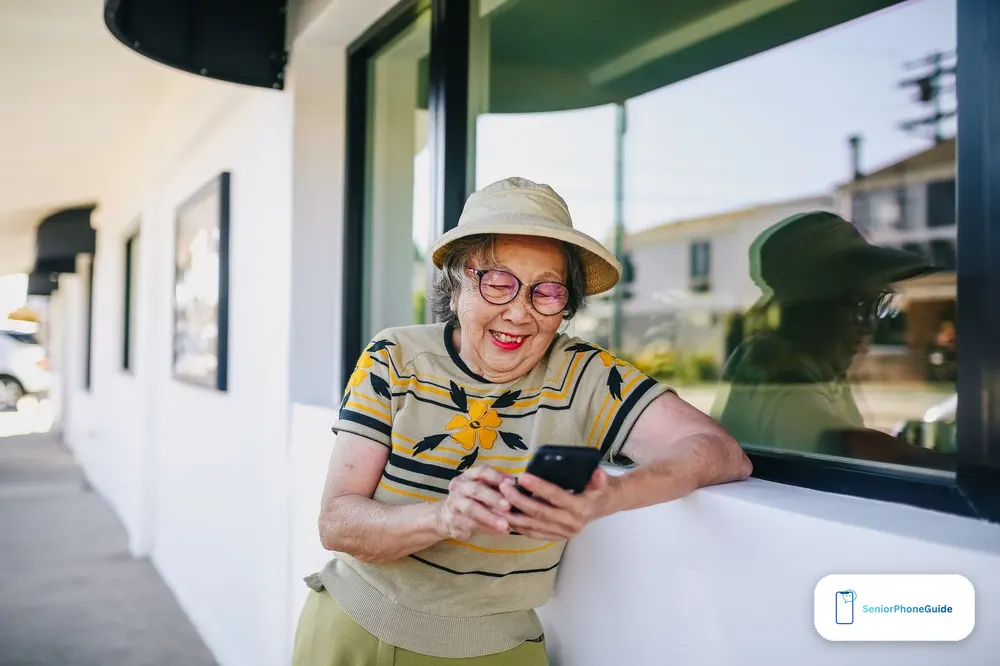
Our verdict: If the calls drop at home, do the free fixes in order — airplane mode, restart, the window test, the case off, 5G to LTE. If the signal outside is fine but the house kills it, Wi-Fi calling covers the calls tonight and a booster is the honest long-term answer. Never pay for a signal-boosting app or a signal code — they cannot work, and the ones that charge are scams.
Getting better signal sounds technical, and the guides written for young people make it sound even more technical. It is not. "Signal" means one simple thing: your phone can hear the cell tower, and the tower can hear your phone. When either side cannot hear the other, calls drop, texts sit unsent, and data crawls. The bars on the screen are a guess, not a measurement — two phones sitting next to each other can show different bars on the same signal. Most weak-signal days are fixed free, in minutes, by one of the steps below. The rest of this guide is which step to try first, what each step actually does, and when to stop trying free fixes and spend money — or switch carriers. If you are doing this for a parent, do it together: the walk-the-house test takes two minutes, and after that you will know whether the problem is the phone, the house, or the carrier.
The short answer
The fastest way to get better signal is to try the free fixes in this order, one at a time, testing a call after each one. Turn airplane mode on for about ten seconds, then off — this forces the phone to search for the nearest, strongest tower. Restart the phone. Walk to a window or step outside and try again. Take the case off. Switch 5G to LTE in the settings. Update the carrier settings. Those six steps fix most weak-signal days, and they cost $0. If the calls are still dropping, turn on Wi-Fi calling — it does not improve the signal, it goes around it, routing the calls over your home Wi-Fi instead. If the signal is fine outside but dead inside the house, the building is the problem, and the honest long-term answer is a signal booster — our signal booster guide explains which one and what it costs. If there is no signal outside either, nothing helps — not even a booster — and the only answers left are Wi-Fi calling or a different carrier. A smartphone is a computer in a pocket, and its signal is a radio conversation with a tower miles away; the fixes below are just ways to help the two sides hear each other. If the senior does not have the right phone yet, our choose a phone guide explains which one fits.
| Fix | What it does | Time | Cost |
|---|---|---|---|
| Airplane mode, 10 seconds | Forces a fresh search for the strongest tower | 10 seconds | $0 |
| Restart the phone | Resets the modem and clears a stuck connection | 2 minutes | $0 |
| Move to a window or outside | Removes walls between the phone and the tower | 1 minute | $0 |
| Take the case off | Unblocks the antenna if the case is thick or metal | 10 seconds | $0 |
| Switch 5G to LTE | Uses the band that passes through walls better | 1 minute | $0 |
| Update carrier settings | Pulls the carrier's latest tower information | 1 minute | $0 |
| Wi-Fi calling | Routes calls over home Wi-Fi instead of the tower | 5 minutes | $0 |
| Signal booster | Captures the outdoor signal and rebroadcasts it inside | An afternoon | $119.99 and up |
Why the bars lie, and the number that tells the truth
The bars on a phone are the most misleading thing on the screen. They are not a measurement. Each phone maker decides how many bars to show for a given signal, so two phones sitting next to each other can show different bars while receiving the same signal. A phone can show full bars and still give slow data, because bars only describe signal strength — they say nothing about how crowded the tower is. The real measurement is a number called dBm, short for decibel-milliwatts. The number is always negative, and closer to zero is better. On the scale the booster makers themselves publish, -50 to -80 dBm is excellent, -81 to -90 is good, -91 to -100 is fair, -101 to -110 is poor, and below -110 is very poor. The line that matters most is -100: weaker than -100 dBm, calls start dropping and data slows to a crawl. A 5 dB improvement can steady a marginal connection; a 20 to 30 dB improvement is a substantial difference. Building materials alone can cost 20 to 50 dB — enough to turn a useful outdoor signal into an unreliable indoor one.
You do not need to become an engineer to use this number. The simplest test needs no number at all: walk the house with the phone and try a call in each room. If the call works at the window and dies in the middle of the house, the building is the problem, not the carrier. If it dies everywhere, including outside, the problem is the carrier or the phone. A family member can go one step further and read the actual number. On an Android phone, it is in Settings, then About phone, then SIM status — look for the signal strength in dBm. On an iPhone, the number lives in a hidden diagnostic menu called Field Test Mode, reached by dialling a code — a senior should never dial a hidden code alone, and a family member should do it, write the number down, and leave it there. There are also free apps that show the number plainly, such as NetMonster on Android and OpenSignal on iPhone and Android, which also show how far away the nearest tower is. Whatever tool you use, test the same way every time: wait 20 to 30 seconds in each spot for the phone to settle, and write the number down. Without the number, there is no way to tell whether a fix actually worked.
The free fixes, in order
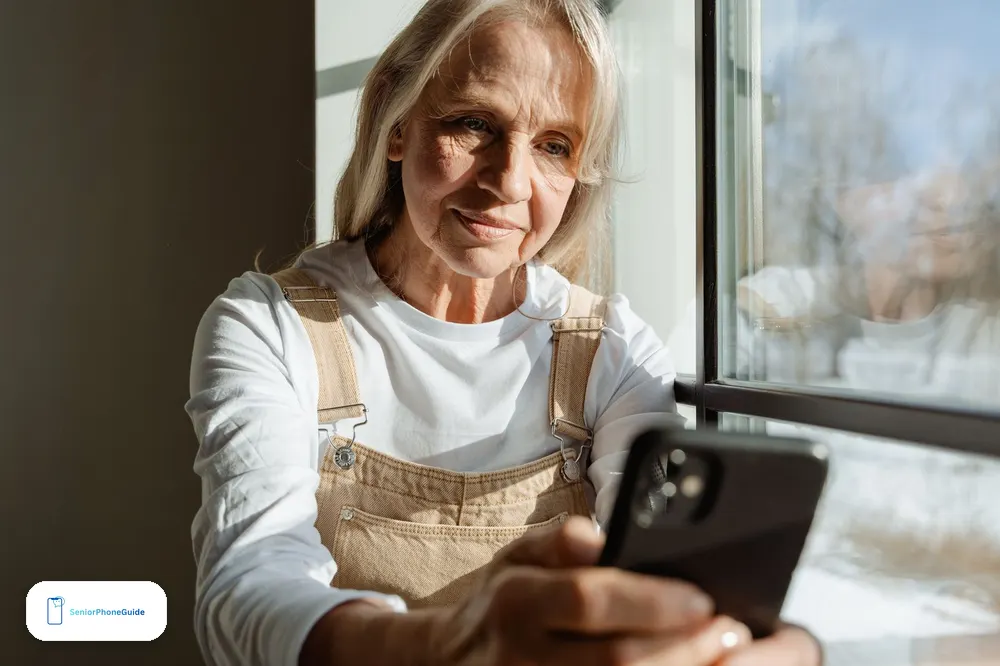
Do these in order, one at a time, and test a call after each one. Stop at the step that fixes it. Every step here is free, and none of them can harm the phone.
1. Airplane mode for ten seconds
Turn airplane mode on, wait about ten seconds, then turn it off. This is the first fix because it is the fastest and it works more often than any other. Once a phone connects to a tower, it stops searching for a new one, to save battery — so it can sit connected to a weak tower all day while a stronger one is nearby. Airplane mode forces it to disconnect and search again, and it usually lands on the nearest, strongest connection. This is an especially good fix when you have been on the move: after a short drive, the phone may still be clinging to a tower miles behind you.
2. Restart the phone
Turn the phone off and back on. A restart resets the modem — the part of the phone that talks to the tower — and clears a temporary radio problem. If airplane mode fixed the problem briefly and it came back, a restart is the next step. It takes two minutes and it costs nothing.
3. Move to a window, or step outside
Walk to a window, or step outside the front door, and try the call again. If it works there, the building is the problem. Concrete, brick, metal siding, stucco, foil-backed insulation and energy-efficient Low-E glass all absorb or reflect the signal. Basements, elevators and interior rooms with no outside wall are the usual dead zones. A few feet can change everything — the signal can be strong at one window and dead a few feet away, because the phone's path to the tower changes with every wall in between. Going higher helps too: an upper floor or a balcony has fewer obstructions between the phone and the tower. This test also tells you the most important fact in the whole guide: if the signal is fine outside, the house is the problem and a booster can fix it; if it is dead outside too, a booster cannot help, because there is nothing outside to amplify.
4. Take the case off
Take the phone out of its case and try the call again. Most thin plastic and silicone cases change almost nothing. But a thick case, a case with metal parts, a magnetic mount, or a wallet case can block or weaken the antenna — the phone's antenna is inside the body, and anything covering it can detune it. If the call improves with the case off, the case was the problem. Try holding the phone differently too, or setting it down on a table: your own hand can block the antenna, and moving the phone a few inches can change the signal.
5. Switch 5G to LTE
If the phone is on 5G, switch it to LTE (also called 4G) and test for ten minutes. This surprises people, because 5G sounds newer and therefore better. Indoors, it is often worse: 5G signals at higher frequencies have more trouble passing through walls than LTE does, so LTE is steadier inside a house. On an iPhone, go to Settings, then Cellular, then Cellular Data Options, then Voice and Data, and choose LTE. On an Android phone, go to Settings, then Connections or Network and Internet, then the mobile network settings, and choose LTE. If the calls get steadier on LTE, leave it there — the phone will still do everything a senior needs on LTE, and it will do it more reliably.
6. Update the carrier settings
Carriers send out small updates that improve how the phone talks to their towers. On an iPhone, go to Settings, then General, then About, and wait — if an update is available, the phone will ask to install it. On an Android phone, the path varies by maker, but it is in Settings under System, then System update, or under the SIM or mobile network settings. This takes a minute and it is free.
7. Charge the phone
Plug the phone in. When the battery is low, the phone stops searching hard for the strongest tower and tries to preserve what is left — so a nearly dead phone can show weak signal that is really a low battery. A charged phone has a better chance of connecting to the strongest tower. This is the easiest fix to miss, because nobody connects a dead battery to a dropped call.
8. Reseat or clean the SIM card
If the phone uses a physical SIM card, turn the phone off, push a paperclip into the small hole on the SIM tray, take the card out, wipe it gently to remove dust, and put it back. A worn or dirty SIM can quietly block services the phone needs. If the card looks damaged, order a new one from the carrier — it is free from most carriers, and it is an especially good idea if the same SIM has been in the phone for years. If the phone uses an eSIM instead of a physical card, this step does not apply; the carrier can re-download the eSIM profile instead, which their support line will do. Our free government phone guide explains how the SIM and the plan fit together for seniors on a tight budget.
9. Update the phone's software
Check for a software update in Settings and install it if one is waiting. Phone makers regularly send out updates that fix connection bugs and improve how the phone handles the network. A phone that has been putting off updates for months can have call and text problems that an update fixes. This is free, and it takes a few minutes on Wi-Fi.
10. Turn the VPN off and test again
If the phone has a VPN — a work profile, a security app, or a VPN the family installed — turn it off and test the call and the data. A VPN can make slow data feel like weak signal, because everything the phone sends has to travel through the VPN's server first. If the speed comes back with the VPN off, the radio was never the problem. Turn the VPN back on after the test if the family needs it.
11. Reset the network settings — last resort among the free fixes
If nothing above worked, reset the network settings. On an iPhone, go to Settings, then General, then Transfer or Reset iPhone, then Reset, then Reset Network Settings. On an Android phone, look for Reset Wi-Fi, mobile and Bluetooth. This is NOT a factory reset: the contacts and photos are safe. But it does wipe the phone's memory of every network it knows — all the saved Wi-Fi passwords, all the paired Bluetooth devices, and the VPN settings. Reconnecting to all of them afterwards is a headache, so do this one with a family member present, and only after the ten steps above. If the phone is a Jitterbug Smart4 or a RAZ Memory phone, have the family member do the reset and the reconnection in the same sitting, so the phone is never left half-set-up.
12. Compare with another phone
Test the same spot with a second phone, ideally on the same carrier. If both phones struggle, the problem is coverage or a crowded tower — not your phone. If only your phone struggles, suspect the phone itself: a damaged antenna, a bad antenna contact, or an older model that lacks the LTE or 5G bands your carrier uses most in your area. Older phones may not support the newest bands at all, and a newer phone can improve the connection simply by using more of the available frequencies. Before buying a new phone for this reason alone, check the carrier's coverage map for your address — and our cell phone deals guide shows the cheapest ways to get a newer phone on a senior plan.
Wi-Fi calling: the fix that goes around the problem

Wi-Fi calling is the cleanest fix when the house has good internet but poor cellular coverage. It routes calls and texts over your home Wi-Fi instead of the cell tower, so the calls work even where the bars are empty. Here is the honest part, which the booster sellers bury: Wi-Fi calling does not improve your cellular signal at all. It is 0 dBm of improvement. It goes around the problem instead of fixing it, which means that when the internet is poor, the call quality will be poor too. That is a fair trade most of the time — but it is not a signal fix, and nobody should sell it as one.
To turn it on, on an iPhone, go to Settings, then Phone, then Wi-Fi Calling, and turn on Wi-Fi Calling on This iPhone. On an Android phone, go to Settings, then Connections or Network and Internet, then Wi-Fi Calling, and turn it on — on some phones it is inside the Mobile Network settings. The phone will ask for an emergency address: give the home address, and keep it current. That address is what the dispatcher sees if you call 911 over Wi-Fi, because Wi-Fi has no tower to locate you from. If the family moves the senior to a new address, update this setting the same day. Wi-Fi calling is free on every major carrier, and it works on the Verizon flip phones and the iPhones for seniors alike — it is a carrier feature, not a phone feature, so confirm it is switched on with the carrier if the setting is missing.
The scam warning: no app and no code can boost your signal
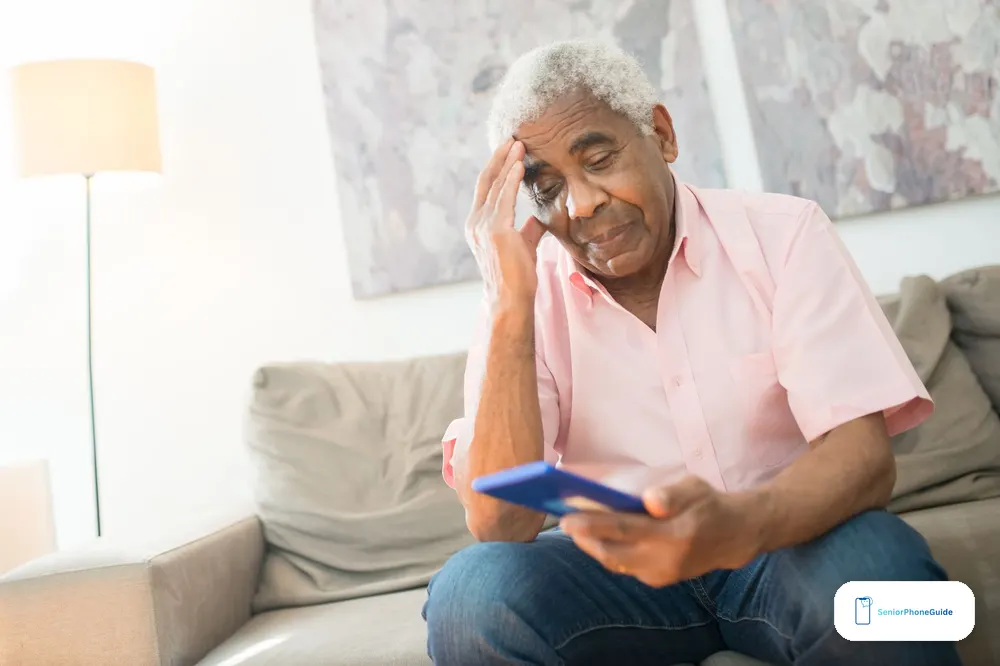
Type "signal booster" into the app store and you will see dozens of apps promising to boost your cell signal. The short answer is no: they cannot. Your signal comes from a cell tower, not from your phone, and no app can generate radio energy that is not already in the air. An app cannot increase the phone's transmit power, cannot punch through a building, cannot improve the signal going from the phone back to the tower, cannot help every device in the house at once, and cannot bypass a crowded tower. The booster sellers themselves say so — and no carrier endorses a signal-boosting app, while every major carrier officially allows a certified hardware booster. There is also no code to boost your signal: the security experts are blunt about this, and the "codes" that circulate online are scams or malware. Never pay for one, and never install an app that promises to boost signal.
What the apps in the store actually do is one of three things. Cleaner apps delete unused files and cached data to free up space — a decluttered phone runs better, but its signal does not change. Speed-up apps close background apps to free memory — and some of them offer to overclock the processor, which means forcing it past its designed speed; the booster makers themselves warn that this can ruin the phone. Security and anti-malware apps run scans and manage passwords — useful, but they do nothing for dropped calls. The only honest thing an app can do for signal is measure it, test it, or reset the connection: show the dBm number, show how far away the nearest tower is, or prompt the phone to re-register with the network. Those are real tools, and a family member can use them. But an app that claims to boost signal is lying, and a senior is exactly the person it is lying to. Our senior scam checklist covers the other versions of this trick, and the dumb phones guide is worth reading if the senior would rather have a phone with nothing to install at all.
When nothing free works: the booster, the femtocell, or a new carrier
If the free fixes are done and the calls still drop, do the outdoor test once more, because it decides everything that follows. Step outside and try a call. If the call works outside, the house is the problem, and a booster is the honest answer. A signal booster is a piece of hardware, not an app: an outdoor antenna captures the signal outside, an amplifier makes it stronger, and an indoor antenna rebroadcasts it inside the house. It works with Verizon, AT&T, T-Mobile and UScellular, and it charges no monthly fee. The booster makers' own rule is the one to remember: a booster needs at least a weak signal outside to amplify. It cannot create signal from nothing. If there is no signal outside at all, a booster will not help, and anyone who sells you one for that house is selling you a box that does nothing.
Our signal booster guide covers the buying decision in full — the weBoost Home MultiRoom is the lead pick there, and the guide explains the sizes, the gain, and the installation. The prices Clark found in December 2025 give the range: Best Buy listed 31 boosters from $23 to $2,749.99, with the most popular mobile models at $119.99 and the weBoost Home MultiRoom at $569.99, while Amazon's range ran from $129.99 to $1,999.99. A booster is the only fix in this guide that costs money, and it is the only one that improves the actual cellular signal inside the house rather than going around it.
There are two other answers, and both are honest. The first is a femtocell, also called a microcell: a small box from the carrier that plugs into the home internet and creates a tiny cell tower inside the house. It works, but it depends entirely on the broadband — if the internet goes down, so do the calls — and it only serves the carrier that supplied it. The second is switching carriers. Carriers perform very differently by location, and a coverage map for your address will show which one is strongest where the senior actually lives. But switching only helps if the cause is the carrier: if the building is blocking the signal, a new carrier's signal will be blocked by the same walls. Check the coverage map before switching, not after. And if the service slows down at the same time every day, the tower is crowded, not weak — no hardware fixes a crowded tower, and the only answer is a different tower or a different time of day. The big-button phone guide and the Panasonic cordless guide are worth a look if the senior's real need is a phone that is easy to hear on, whatever the bars say.
The safety rules: 911 still works when the bars do not
The most important fact in this guide is the one about emergencies. Under the FCC's rules, any phone that can power on and connect to a tower can call 911 — even with no service plan and even with no SIM card in it. The carriers must route every 911 call, no matter whose customer you are. When the screen says "No Service", "SOS" or "Emergency calls only", it means your own carrier is out of range — but another carrier's tower must still carry the 911 call. The phone finds the strongest tower it can hear and the call goes through. Two catches matter. First, without a SIM card the dispatcher will not see a callback number, so stay on the line and do not hang up. Second, if no tower is in range at all, no call connects — the only fallback then is satellite SOS, on an iPhone 14 or newer or a Pixel 9 or newer, or Wi-Fi calling if the Wi-Fi is up. That is why the Wi-Fi calling emergency address matters: register the home address the day Wi-Fi calling is switched on, and update it the day the senior moves. Our emergency SOS setup guide shows how to set up the SOS shortcut on iPhone and Android, so help is one button away.
The other safety rules are short. Never download an app that promises to boost signal, and never pay for a signal code — both are scams, and the app store is full of them. The full list of phone scams aimed at seniors, and what to do about each one, is in our senior scam checklist. Never dial a hidden diagnostic code alone: the Field Test Mode number is a tool for a family member, not a setting a senior should be asked to open. Never let anyone sell a booster for a house with no signal outside — the box cannot work there. And never assume the phone is broken because the bars are low: the bars are a guess, the dBm number is the truth, and the walk-the-house test tells you which one to believe. If the senior uses a caption phone for hearing, the same rules apply — the caption service rides on the same connection, so a weak signal makes the captions lag, and Wi-Fi calling is the fix that keeps the captions flowing at home.
Setup for a parent: the family checklist

If you are setting this up for a parent, do it once, together, and write the answers down. Walk the house with the phone and try a call in each room — write down which rooms work and which do not. Read the dBm number at the best window and write it next to the room name, so the next person who helps can see whether anything changed. Turn on Wi-Fi calling together, register the home emergency address, and test a call over Wi-Fi before you leave. Take the thick or metal case off together and see whether the calls improve. Switch the phone to LTE together if the 5G signal is weak indoors. If the free fixes do not work, make the booster decision as a family — it is a purchase, and it is also an installation, and the senior should not be the one climbing into the attic to mount an antenna. And keep the old phone charged in a drawer: a phone with no plan can still call 911, so it is a backup emergency device, not junk. If the senior still uses a basic flip phone, the same fixes apply — our best flip phones guide lists the models that still work in 2026. The choose a phone guide is the place to start if the senior needs a simpler phone before any of this, and our free government phone guide explains the $0 route for seniors who qualify.
What getting better signal cannot do
Getting better signal cannot do everything the ads imply. Wi-Fi calling cannot improve the signal — it is 0 dBm of improvement, and it goes around the problem instead of fixing it. A booster cannot fix a crowded tower, and it cannot create signal where there is none outside. An app cannot boost signal at all. A new phone only helps if the old one lacks the LTE or 5G bands the carrier uses most in your area — a new phone on the same weak tower is the same weak signal in a newer box. A "signal-boosting" case does not exist: a case can only block signal or leave it alone, never improve it. And no fix in this guide makes the internet faster by itself — the phone's data speed is set by the tower and how crowded it is, not by the bars. The honest version is simpler: the free fixes help the phone hear the tower, Wi-Fi calling helps the calls go around the tower, and the booster helps the tower reach inside the house. Each one does one job, and none of them does the others.
Troubleshooting: the still-bad flow
If the calls are still dropping after the free fixes, work through this flow in order. First, step outside and try a call: if it works outside, the house is the problem — go to Wi-Fi calling tonight and the booster guide tomorrow. If it fails outside too, try a second phone in the same spot: if both fail, the carrier or the tower is the problem. Call the carrier and ask two things — is there an outage or maintenance in the area, and is the account set up correctly for the phone's bands. Ask for a new SIM card while you are on the phone: a worn SIM is a quiet cause, and a new one is free from most carriers. If the carrier says the coverage is fine and the second phone works, the phone itself is the suspect — a damaged antenna or an old model that lacks the bands. If the carrier's coverage map shows another carrier is stronger at the address, switching is the honest answer, and our deals guide shows the cheapest senior plans to switch to. If none of that works and the signal outside is zero, the house needs Wi-Fi calling and nothing else — no booster, no app, no code will change a tower that is not there.
How this guide was built
This guide was built the way every guide on this site is built: by reading the pages that already rank for the question, finding what they miss, and writing the missing part. The rival pages read in full were 5gstore's June 2026 guide, Clark Howard's December 2025 guide, HiBoost's 12-fix guide, Wilson's weBoost guide, and SureCall's booster-app guide. The dBm scale in this guide is Wilson's, because it is the finest-grained one published; the booster prices are Clark's December 2025 check of Best Buy and Amazon, dated as such. The 911 rule is the FCC's own rule, 47 CFR 20.18: every carrier must route a 911 call from any phone that can reach a tower, with or without a plan or a SIM card. The "signal apps cannot work" warning is SureCall's and the security experts' own words, not ours. This guide was not hands-on tested on every phone named — the steps are the carriers' and the makers' own published steps, checked against each other in November 2026, and the free fixes cost $0, so there is nothing to buy before trying them. There are no affiliate links on this page: this is a plain-English troubleshooting guide, not a buying guide, so this guide earns nothing from the phones or the boosters it names.
Frequently asked questions
- Why do I have full bars but slow data?
- Bars only describe signal strength, not how crowded the tower is. If many people are using the same tower at the same time — a stadium, a busy evening, a rush-hour neighbourhood — the data slows down even with full bars. No phone setting and no booster fixes a crowded tower; the only answers are a different tower, a different carrier, or a quieter time of day.
- What does -100 dBm mean?
- It is the line where calls start dropping. On the scale the booster makers publish, -50 to -80 dBm is excellent, -81 to -90 is good, -91 to -100 is fair, -101 to -110 is poor, and below -110 is very poor. Weaker than -100 dBm, expect slow data and dropped calls. A 5 dB improvement can steady a marginal connection; a 20 to 30 dB improvement is a substantial difference.
- Does airplane mode really help?
- Yes, and it is the first fix for a reason. Once a phone connects to a tower it stops searching for a new one, to save battery — so it can sit on a weak tower all day while a stronger one is nearby. Ten seconds of airplane mode forces it to disconnect and search again, and it usually lands on the nearest, strongest connection.
- Should I switch 5G to LTE?
- Indoors, usually yes. 5G signals at higher frequencies have more trouble passing through walls than LTE does, so LTE is steadier inside a house. On an iPhone go to Settings, then Cellular, then Cellular Data Options, then Voice and Data, and choose LTE. On Android it is in Settings under Connections or Network and Internet. Test it for ten minutes before deciding.
- Does taking the case off help?
- Only if the case is the problem. Most thin plastic and silicone cases change almost nothing. But a thick case, a case with metal parts, a magnetic mount, or a wallet case can block or weaken the phone's antenna. Take the case off and try a call — if it improves, the case was the cause. Your own hand can block the antenna too, so try setting the phone down.
- Can an app boost my signal?
- No. Your signal comes from a cell tower, not from your phone, and no app can generate radio energy that is not already in the air. An app cannot increase the phone's transmit power, punch through a building, or help every device in the house. The only honest thing an app can do is measure the signal, show how far away the nearest tower is, or prompt the phone to re-register with the network.
- Is there a code to boost signal?
- No, and the codes that circulate online are scams or malware. The security experts are blunt about this: there is no code that boosts cell phone signal. Never pay for one, and never install an app that promises to boost signal. If a code or an app asks for payment, it is a scam.
- Does Wi-Fi calling improve my signal?
- No — it is 0 dBm of improvement. Wi-Fi calling does not touch the cellular signal at all; it goes around it, routing calls and texts over your home Wi-Fi instead of the tower. That makes it the cleanest fix when the house has good internet but poor coverage — and it also means that when the internet is poor, the call quality will be poor too.
- Will a booster work if I have no signal outside?
- No. A booster needs at least a weak signal outside to amplify — it cannot create signal from nothing. Step outside and try a call first: if the call works outside, the house is the problem and a booster can fix it. If there is no signal outside either, the only answers left are Wi-Fi calling or a different carrier.
- Can I call 911 with no bars?
- Yes. Under the FCC's rules, any phone that can power on and connect to a tower can call 911 — even with no service plan and even with no SIM card. When the screen says "No Service" or "SOS", it means your own carrier is out of range, but another carrier's tower must still carry the 911 call. Without a SIM the dispatcher will not see a callback number, so stay on the line. If no tower is in range at all, no call connects.
- Why is my signal worse in the basement?
- Because the building is in the way. Concrete, brick, metal siding, stucco, foil-backed insulation and energy-efficient Low-E glass all absorb or reflect the signal, and a basement has the most material between the phone and the tower. Building materials alone can cost 20 to 50 dB — enough to turn a useful outdoor signal into an unreliable indoor one. Basements, elevators and interior rooms are the usual dead zones.
- Does a low battery hurt signal?
- Yes. When the battery is low, the phone stops searching hard for the strongest tower and tries to preserve what is left — so a nearly dead phone can show weak signal that is really a low battery. Plug the phone in and test again before trying anything else.
- Should I reset my network settings?
- Only as a last resort among the free fixes. It is NOT a factory reset — the contacts and photos are safe — but it wipes the phone's memory of every network it knows: all the saved Wi-Fi passwords, all the paired Bluetooth devices, and the VPN settings. Reconnecting to all of them is a headache, so do it with a family member present, and only after the other free fixes.
- Will a new phone fix my signal?
- Only if the old phone is the problem. Older phones may not support the newest LTE or 5G bands the carrier uses most in your area, and a newer phone can improve the connection simply by using more of the available frequencies. But a new phone on the same weak tower is the same weak signal in a newer box — check the carrier's coverage map for your address first.
- Do I need a booster or a new carrier?
- Do the outdoor test. If the call works outside but dies inside, the house is the problem and a booster is the answer — our signal booster guide covers the buying decision. If the call fails outside too, and a second phone on the same carrier fails in the same spot, the carrier is the problem and switching is the honest answer. If the building is blocking the signal, a new carrier's signal will be blocked by the same walls.
Verdict: do the free fixes in order first — airplane mode, restart, the window test, the case off, 5G to LTE. If the signal outside is usable but the house kills it, Wi-Fi calling covers the calls tonight and a booster is the honest long-term answer. If the signal outside is zero, nothing helps — not a booster, not an app, not a code — and anyone charging you for one is selling a scam.